Centre director recruitment: where early learning services find their next leader
Centre director recruitment should combine a fair assessment of internal candidates with external recruitment where the service needs additional capability or a wider candidate pool. Before choosing either route, define the leadership responsibilities, statutory appointments, authority and support attached to the position.
Start with the work that needs doing. Identify what the next director must maintain, what needs improvement and which decisions remain with the approved provider or operations team. That produces a clearer brief than asking for someone experienced who can “hit the ground running”.
Why leadership roles are hard to fill
Hiring a centre director involves more than finding an experienced educator. Define the management work, people responsibilities and educational expectations that the position carries. Then assess whether the proposed hours, authority and support allow someone to perform that work.
Avoid treating every problem at the service as a responsibility for the incoming director. Separate matters they can address directly from those requiring provider decisions, additional resources or changes elsewhere in the organisation. Put those boundaries in the role description.
Research on leadership and retention in the Northern Territory highlights the importance of leadership support and working conditions when examining workforce retention. Use those findings to examine the environment offered to a new leader, rather than assuming recruitment alone will resolve workforce difficulties. >Downey and colleagues’ study.
Describe the service honestly to candidates. Explain its operating pattern, team structure, current priorities and the support available from the provider. If the position includes substantial time working directly with children, specify that expectation alongside management duties.
Test the brief before advertising. Ask whether an applicant can understand what success looks like, who supports them and which decisions they can make. Resolve conflicting expectations within the management team before asking candidates to respond to them.
Promoting from within versus recruiting externally
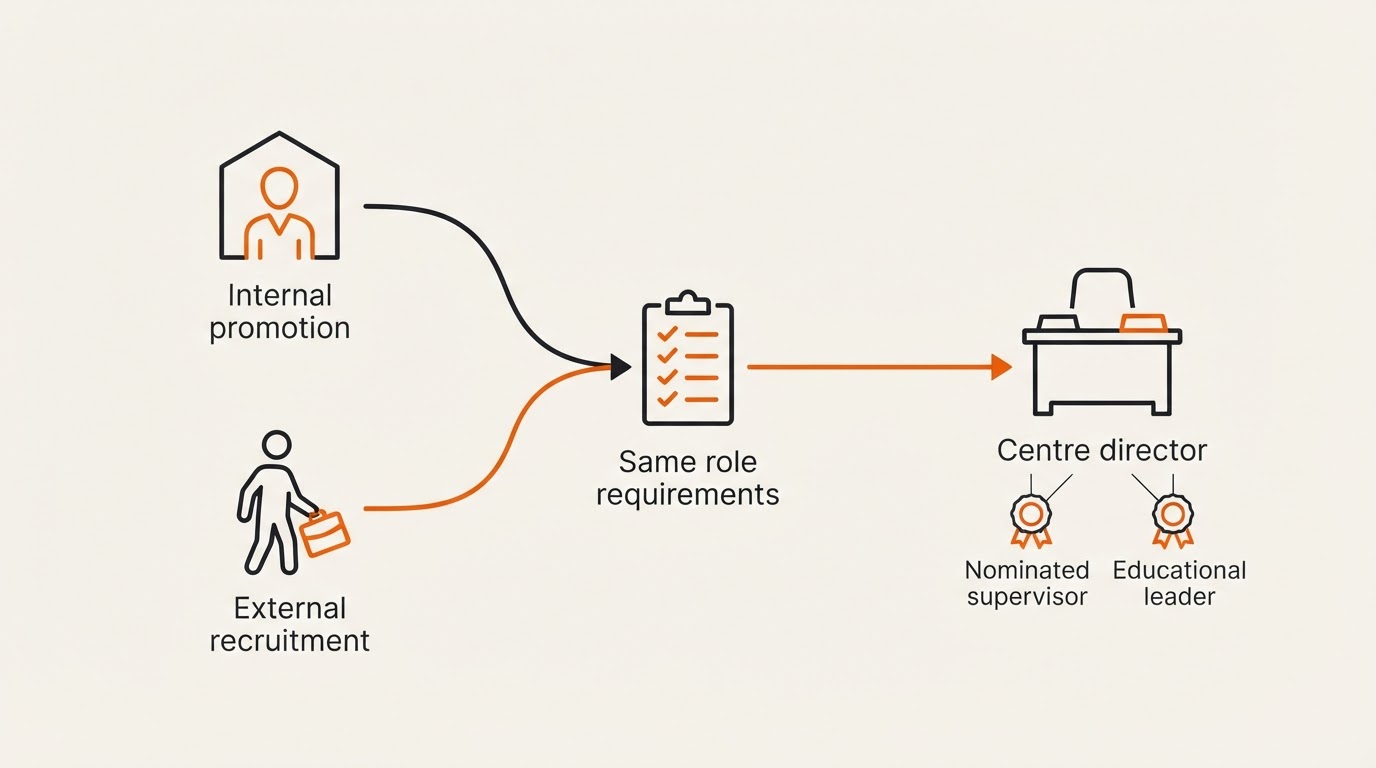
Assess internal promotion and external recruitment against the same requirements. An internal candidate’s familiarity with the service is useful evidence, but it does not establish readiness for every management responsibility. An external candidate’s previous title is equally insufficient without evidence of what they actually did.
For internal candidates, examine examples of judgement, communication, team support and follow-through. Discuss the transition from colleague to manager, the responsibilities they have not yet performed and the development support required.
For external candidates, examine the context of their previous work. Ask about service type, reporting relationships, authority and the challenges they handled. Distinguish their own decisions from work led by a wider management team.
Use this decision tool before selecting a recruitment route:
| Service situation | Recruitment response | Confirm first |
|---|---|---|
| An internal candidate has relevant experience and demonstrated readiness | Assess them through a documented promotion process. | Evidence against the role requirements and a supported transition plan. |
| An internal candidate has potential but clear development gaps | Define a development pathway and assess whether it meets the vacancy’s needs. | Available mentoring, delegated responsibilities and interim leadership arrangements. |
| The service needs capability absent from the current team | Recruit externally using a specific capability brief. | Which capabilities are essential and how candidates will demonstrate them. |
| Internal and external candidates are both available | Use consistent assessment criteria and questions. | The evidence required and who makes the appointment decision. |
| The outgoing director’s duties exceed a workable position | Redesign the role before recruiting a replacement. | Workload, authority, provider support and responsibilities assigned elsewhere. |
Give unsuccessful internal applicants clear, respectful feedback and an agreed development conversation. Keep assessment records factual and explain decisions against the role requirements.
Internal development and external recruitment can also run alongside each other. Build future leadership capability while filling the current vacancy through the route that meets the service’s immediate needs.
What the nominated supervisor and educational leader roles require
Treat the employment position and statutory appointments separately. Record whether the centre director will also be nominated supervisor, educational leader, or both. Specify the responsibilities and support for each appointment.
The Australian Children’s Education and Care Quality Authority explains that an approved service must have at least one nominated supervisor, with written consent to the nomination. Minimum requirements include being at least 18, having adequate knowledge of education and care, and being able to supervise and manage a service effectively. Its guidance also sets out the compliance history matters the approved provider must assess. >Nominated supervisor requirements.
Do not treat an employment offer or previous director title as proof that this assessment is complete. Assign responsibility for checking the applicable requirements and completing the appointment process.
The educational leader has a different function. Regulation 118 requires written designation of a suitably qualified and experienced person to lead development and implementation of the educational program. Regulation 148 requires the person’s name in the staff record. >Official educational leader guidance.
Explain how the educational leader role works within the service: who supports it, how collaboration occurs and how its responsibilities fit alongside other duties. Australian research examining educational leaders’ implementation of the role reinforces the need to understand the work beyond a title. >Martin and colleagues’ study.
Check qualification, registration and other applicable requirements for the actual duties and jurisdiction. Requirements vary by setting and state or territory; use the official >qualification guidance and relevant regulator information before finalising the brief.
How agencies approach leadership searches
Ask a recruitment agency to explain its proposed search process rather than assuming every leadership assignment works the same way. Establish how it will identify candidates, assess evidence and keep the employer informed.
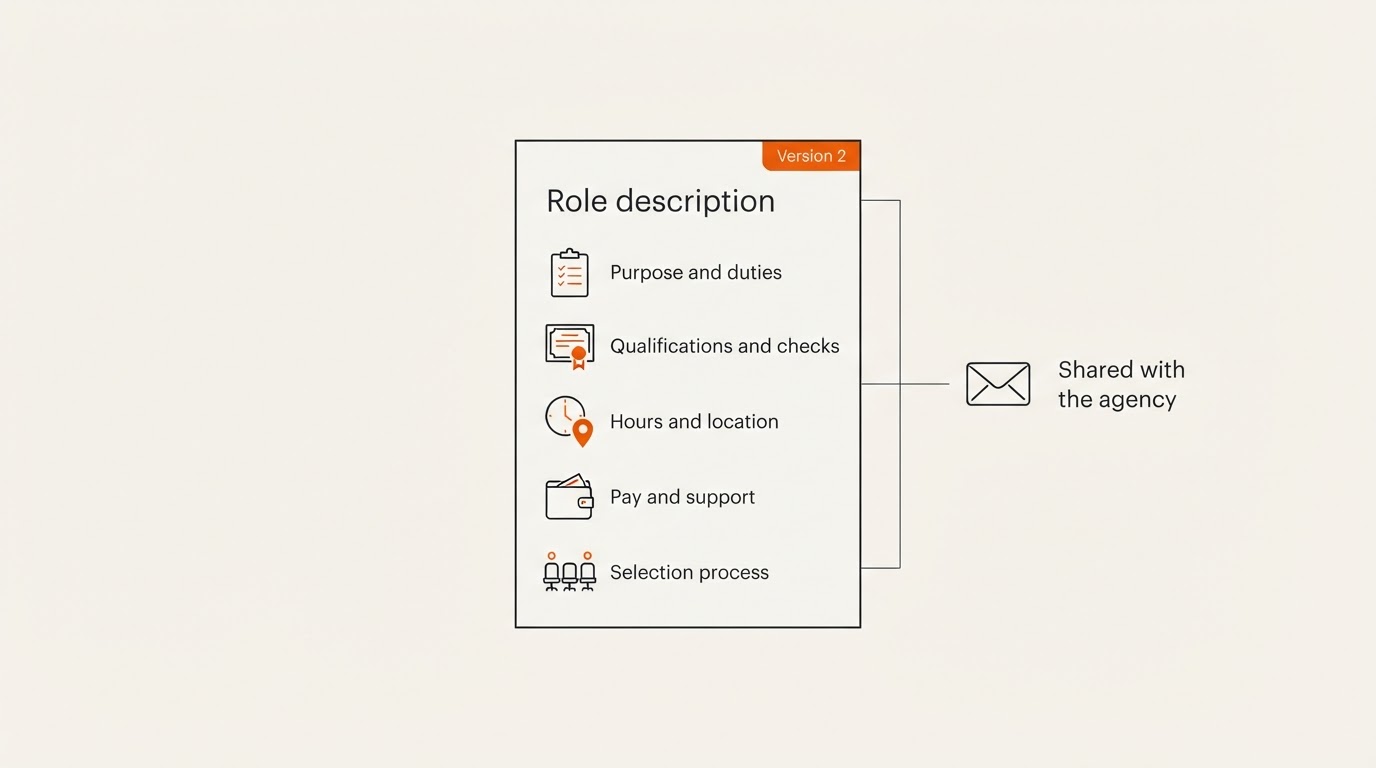
Provide a brief that distinguishes essential capabilities from skills the service can develop. Include remuneration, hours, location, reporting relationships, statutory appointments and the practical support offered. Describe the priorities the incoming director will inherit.
Ask how the agency will assess leadership experience. Request examples tied to your criteria, such as managing difficult conversations, organising work, supporting educators or implementing agreed improvements. Avoid accepting broad claims about leadership style without supporting examples.
Agree how confidentiality will be handled, particularly where a vacancy has not been announced or candidates are currently employed. Identify who receives candidate information and who can discuss the assignment on the employer’s behalf.
Settle the selection process before interviews begin. Decide who reviews applications, who interviews, how references are obtained and who makes the final decision. Tell candidates what to expect and keep the process moving through agreed decision points.
You can find an agency using its recorded services and coverage, then confirm whether it undertakes the leadership assignment you need. Read how listings are checked before interpreting a listing. Inclusion in the directory does not establish an agency’s suitability for a particular search.
Reducing the risk of a long vacancy in centre director recruitment
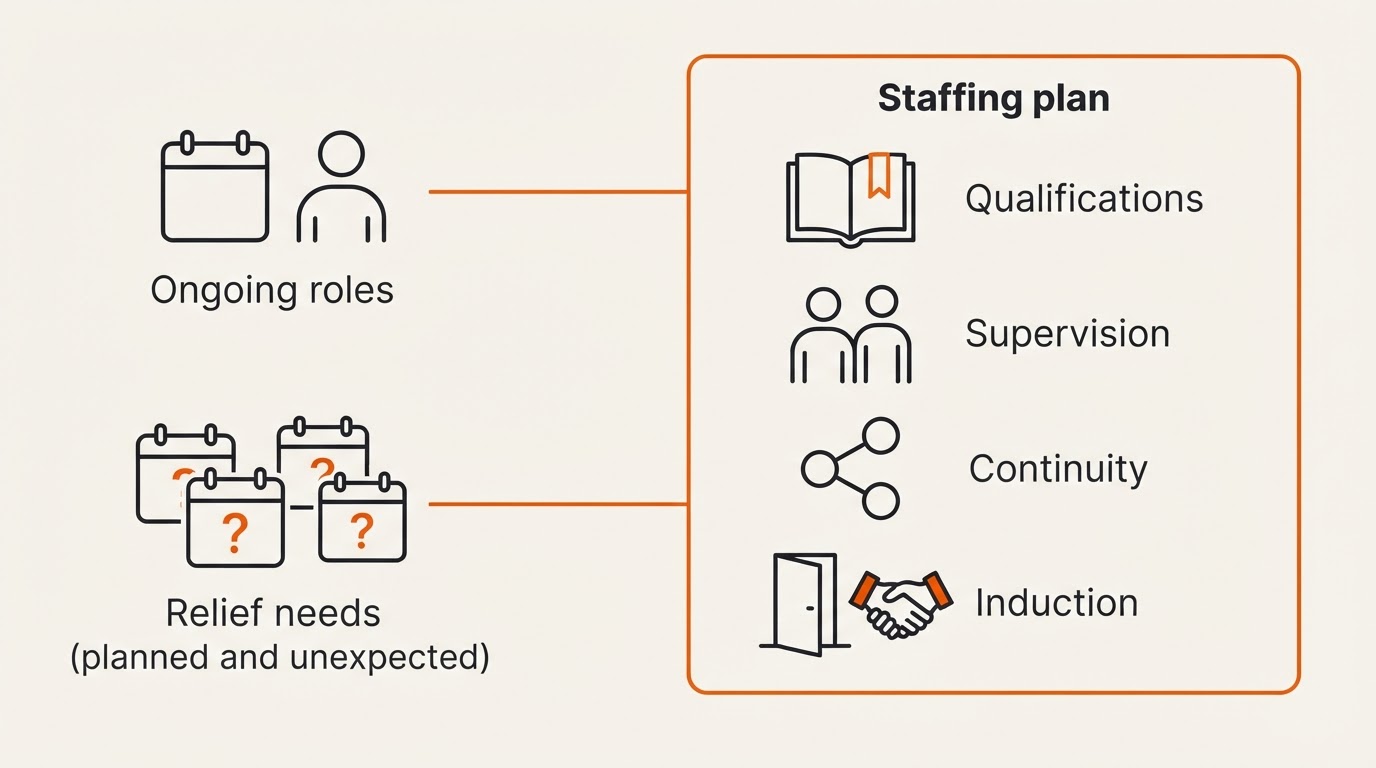
Prepare interim leadership arrangements before relying on a recruitment timeline. Identify who handles daily decisions, staff support, family communication and escalation while the vacancy remains open. Verify that applicable statutory appointments and staffing arrangements are addressed.
Keep interim responsibilities visible. Give the person covering the work clear authority, access to information and a contact for decisions beyond their remit. Review the workload rather than adding the outgoing director’s entire position to another employee’s existing duties.
Use recruitment feedback to test the brief. Where candidates decline or withdraw, record their stated reasons and review the relevant conditions. Distinguish feedback about the position from assumptions about candidate motivation.
Change the brief when the underlying job changes, and communicate the changes to everyone involved. Do not continue interviewing against one description while discussing different expectations internally.
Plan the incoming director’s induction before appointment. Arrange access to policies, service records and reporting systems, and schedule conversations with the people who will support the role. Agree priorities with the new director instead of presenting every unfinished task as equally urgent.
Protect development after recruitment as well. The National Children’s Education and Care Workforce Strategy includes leadership and capability among its focus areas. Use the official >workforce strategy information to inform longer-term planning alongside the immediate appointment.
Frequently asked questions
Should we promote internally or recruit externally?
Choose the route that supplies the capability the service needs, using the same assessment criteria for both. Assess internal readiness and external experience through specific examples, then match development support to the successful candidate.
Is a centre director automatically the nominated supervisor?
No: confirm the nominated supervisor appointment separately from the employment position. Assess the applicable requirements, obtain written consent and complete the required appointment process.
Should the director also be the educational leader?
Assign both roles to one person only when their suitability, workload and support make the arrangement workable. Specify each responsibility separately and complete the educational leader’s written designation.
References
Cross, E., Dobson, M. and Brooks, J.S. (2024) ‘Leadership competencies in early childhood education: Design and validation of a survey tool’, Australasian Journal of Early Childhood, 49(4), pp. 284–300. >https://doi.org/10.1177/18369391241282679.
Cumming, T., Wong, S. and Logan, H. (2021) ‘Early childhood educators’ well-being, work environments and “quality”: Possibilities for changing policy and practice’, Australasian Journal of Early Childhood, 46(1), pp. 50–65. >https://doi.org/10.1177/1836939120979064.
Downey, B., Letts, W., Gibbs, L. and McLeod, S. (2024) ‘Leadership and retention in early childhood education’, Australasian Journal of Early Childhood, 49(4), pp. 343–357. >https://doi.org/10.1177/18369391241286935.
Eadie, P., Levickis, P., Murray, L., Page, J., Elek, C. and Church, A. (2021) ‘Early childhood educators’ wellbeing during the COVID-19 pandemic’, Early Childhood Education Journal, 49, pp. 903–913. >https://doi.org/10.1007/s10643-021-01203-3.
Martin, J., Nuttall, J., Henderson, L. and Wood, E. (2020) ‘Educational Leaders and the project of professionalisation in early childhood education in Australia’, International Journal of Educational Research, 101, article 101559. >https://doi.org/10.1016/j.ijer.2020.101559.