How early learning employers combine permanent staffing and casual relief educators
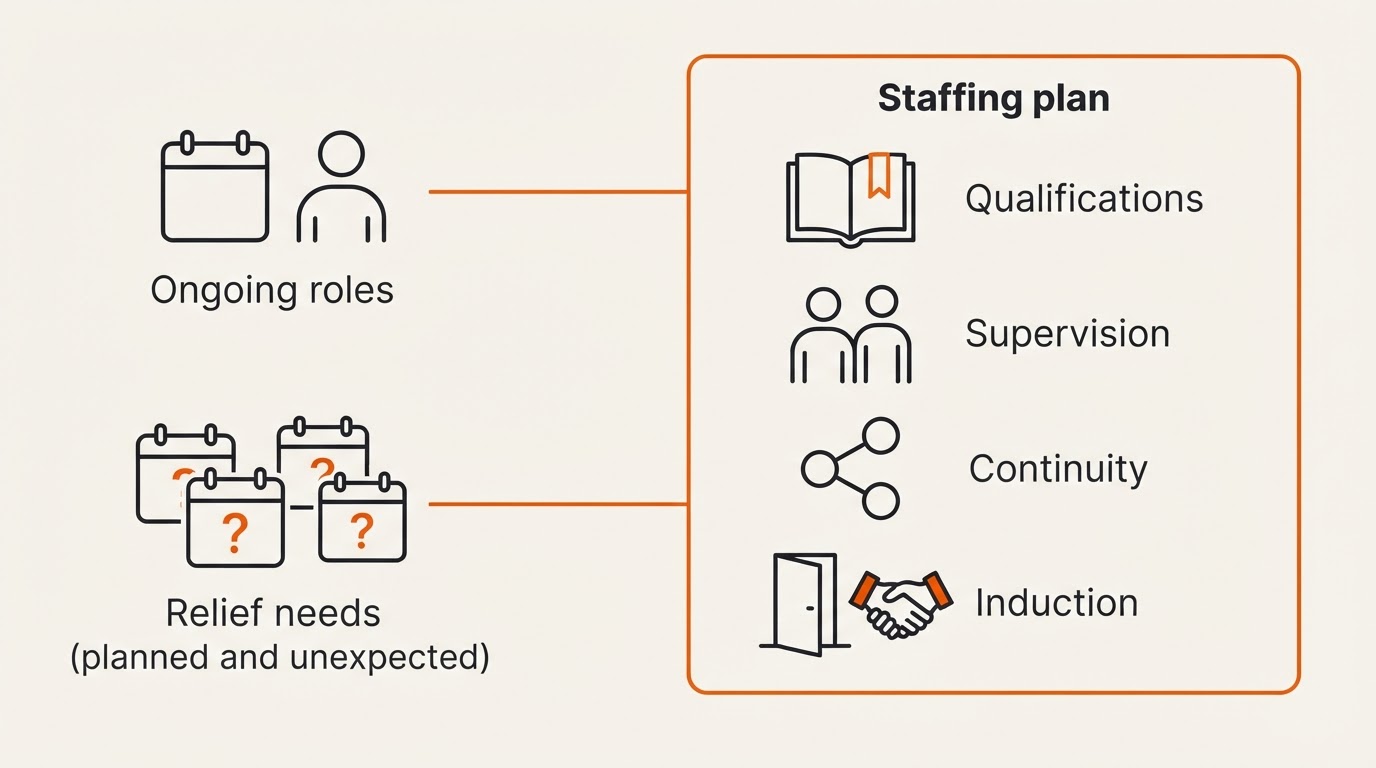
Early learning employers can combine permanent recruitment with casual relief educators by planning their ongoing team separately from the cover needed for absences and temporary gaps. Build that plan around the service’s operating pattern, qualification requirements, supervision needs and capacity to maintain familiar relationships.
Start by distinguishing predictable work from uncertain demand. Identify which roles belong in the ongoing establishment, which absences can be planned, and which gaps need a response at short notice. Set responsibilities for each, rather than using the same booking process for every empty roster line.
Why the staffing mix matters for ratios and continuity of care
A roster needs to do more than put enough names beside a shift. Under the National Quality Framework, educators counted in educator-to-child ratios must be working directly with children and meet applicable qualification requirements. Adequate supervision must also be maintained; meeting a numerical ratio does not settle every supervision question. Requirements and specific provisions vary by jurisdiction and service circumstances. The Australian Children’s Education and Care Quality Authority sets these out in its >staffing arrangements guidance.
Give continuity its own place in the plan. The National Quality Standard’s continuity-of-staff element addresses the organisation of staffing to support consistent relationships between educators and children. Assess familiarity alongside availability and qualifications when organising replacement staff. See the official >continuity of staff guidance.
Decide how a replacement educator will join the existing team. Assign someone to introduce the room’s routines, explain supervision arrangements and answer questions throughout the shift. Include that responsibility in the roster rather than leaving it to whoever happens to be available.
Where returning relief educators have suitable qualifications, experience and availability, use consistent room allocations to support familiarity. Check each allocation against that day’s children, activities and team. Familiarity supports planning; it does not replace those checks.
What permanent recruitment and casual relief each solve
Permanent recruitment fills an ongoing role. Define its responsibilities, working hours, qualifications, remuneration and expected contribution before starting the search. Casual relief covers a defined staffing gap, so the immediate brief must explain what the educator needs to do and when.
Name the problem accurately. Annual leave booked ahead, an unexpected absence and an unfilled ongoing position all create gaps, but each needs a different response.
For a continuing vacancy, specify what the future employee will own beyond daily attendance. Include room leadership, educational planning, communication responsibilities or participation in service improvement where these belong to the role. For relief, describe the shift, room, qualification level, arrival process and available support.
Use the following situations to organise the response:
| Situation | Response | Confirm first |
|---|---|---|
| Planned annual leave | Arrange cover ahead and provide a clear handover. | Dates, hours, qualification level and responsibilities needing cover. |
| Unexpected same-day absence | Activate the relief process and assess the revised roster. | Actual availability, arrival time, qualifications and supervision arrangements. |
| Vacancy covered by relief for more than a few weeks | Review the ongoing role and recruitment plan alongside interim cover. | Why the vacancy remains open and whether the brief, roster or conditions need changing. |
| Early childhood teacher absence in a preschool program | Check the applicable teacher-absence provisions before arranging a replacement. | Jurisdiction, service circumstances and the replacement’s eligibility for that function. |
| Outside school hours care shift | Arrange cover suited to school-age care and the particular shift. | Applicable jurisdictional requirements, duties, hours and arrival arrangements. |
Review repeated relief bookings by cause. Separate planned flexibility from unresolved vacancies and recurring roster problems. Where the underlying need is ongoing, address the permanent recruitment brief while maintaining suitable interim cover.
Include the existing team’s workload in the review. Australian research by Eadie and colleagues found associations between professional wellbeing, educator–child relationships and turnover risk during the pandemic. Use these findings to inform workplace support and workload discussions, rather than treating recruitment as the only workforce response. >Read the study.
Planning a staffing mix by service type
Build the plan around each service’s actual operating pattern. Map opening and closing periods, attendance patterns, planned leave, recurring vacancies and time allocated away from direct work with children. Identify the qualification and role requirements attached to each part of the roster.
For long day care, plan replacement arrangements across the full operating day. Confirm the hours needed before requesting childcare relief staff. Availability in the middle of the day does not solve an opening shift, and a general educator booking does not establish eligibility to fulfil a particular qualification or responsibility.
For kindergarten and preschool, distinguish educator cover from the requirements applying to early childhood teachers. Check the relevant provisions before booking a replacement for an absent teacher. Tell the agency which function needs covering, rather than asking only for another person on the roster.
For outside school hours care, use the requirements for school-age care in the relevant jurisdiction. The Australian Children’s Education and Care Quality Authority explains that states and territories have their own qualification requirements for this setting. Do not carry assumptions from preschool-age services into a school-age roster. Its >qualification requirements page provides the relevant pathways.
Check geography with the same precision. Ask whether early childhood casual staff are available for the specific suburb or regional location, required start time and booking length. Obtain confirmation for the booking rather than relying on a broad coverage statement.
Test the staffing plan separately at each location. Record the differences in operating hours, role requirements and induction support so that an arrangement suitable for one service is not automatically copied to another.
Working with agencies for permanent and casual needs
Give a recruitment agency separate briefs for permanent recruitment and relief staffing, even when discussing both in the same meeting. Specify the required outcome and ask the agency to confirm which services it provides.
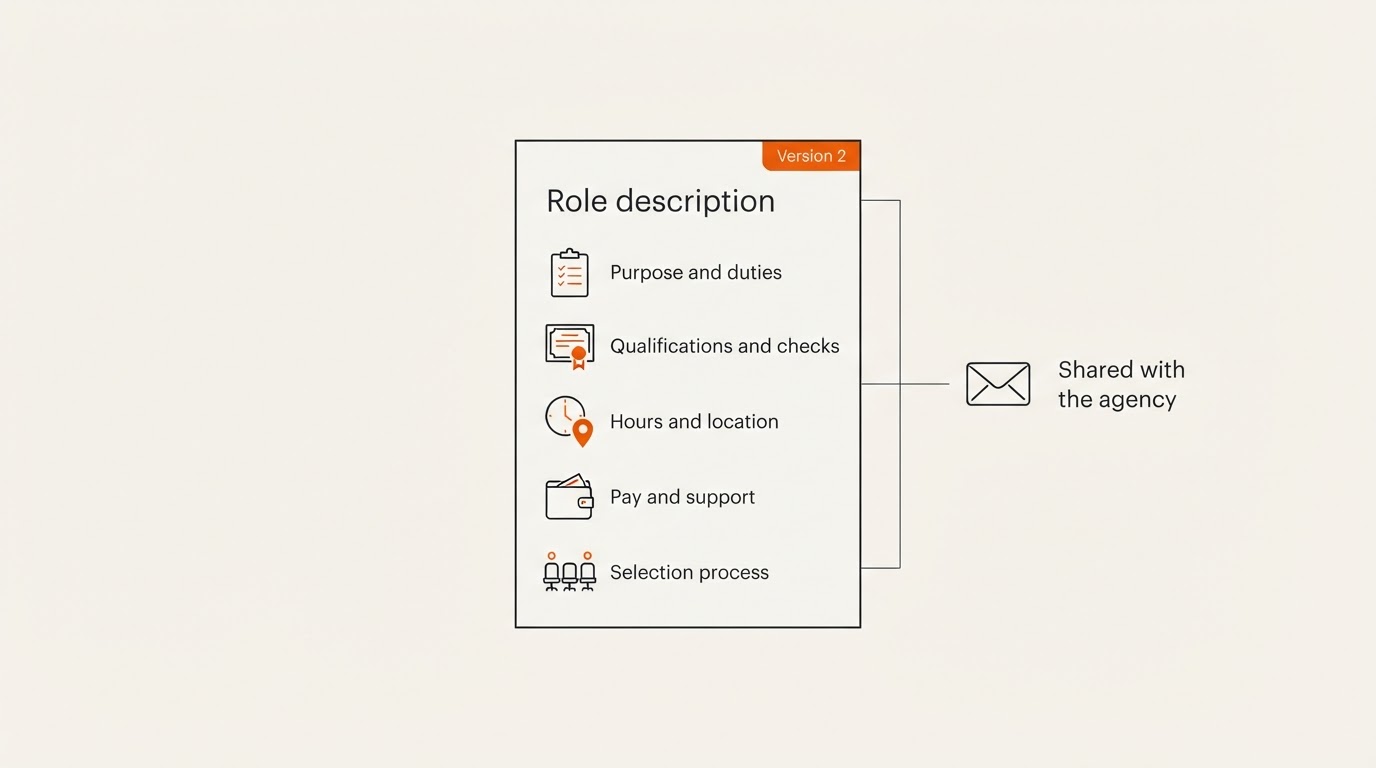
A permanent recruitment brief should describe the position, reporting relationships, qualifications, hours, remuneration and selection process. Include practical details affecting the candidate’s decision, such as travel expectations or responsibilities across multiple rooms.
A relief brief should identify booking dates, start and finish times, qualification level, service location and duties. Explain who will welcome the educator and what information will be provided before work begins. Update the brief when the assignment changes.
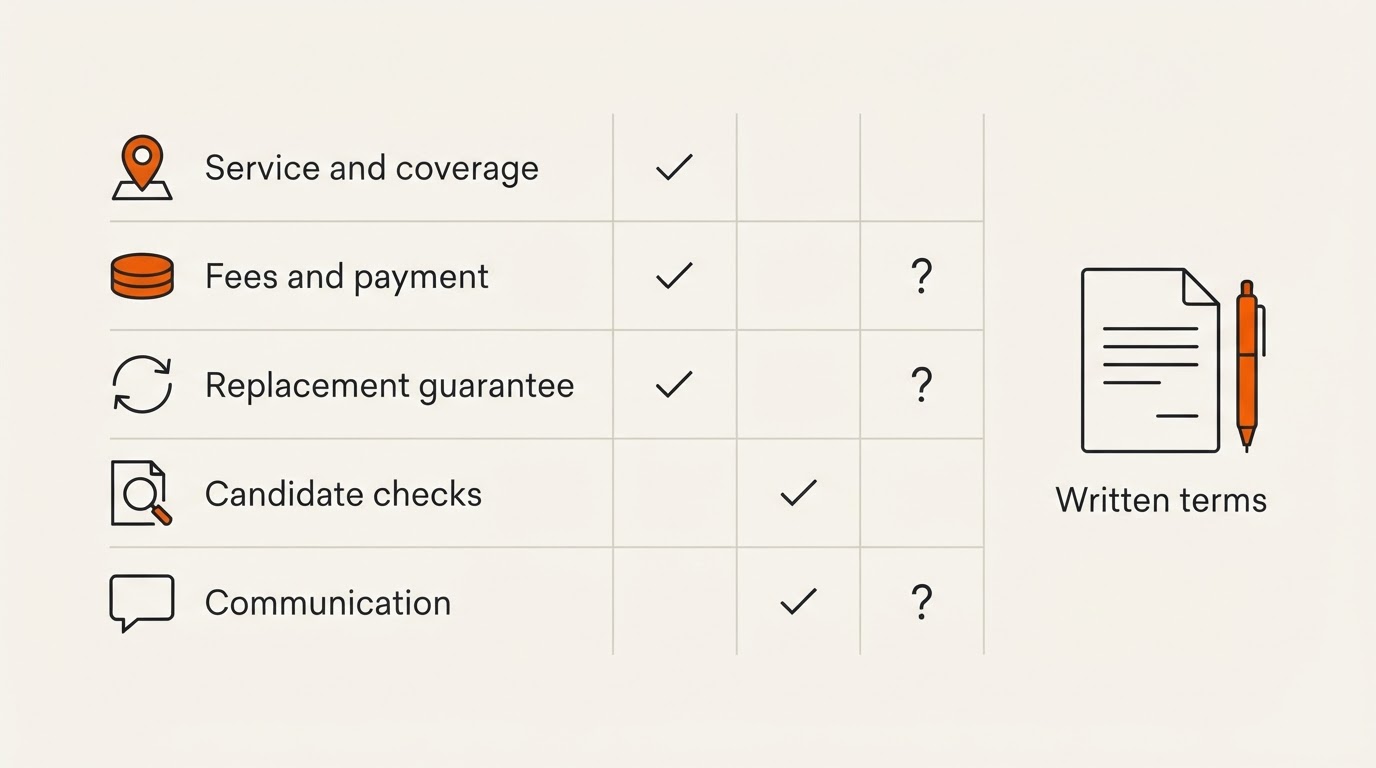
Ask agencies to explain their process in concrete terms. Establish how availability is confirmed, when the service receives the educator’s details, and what happens if a booking cannot be filled. Agree how cancellations and changes are handled, and obtain written terms.
Clarify who employs and pays the educator, what the agency supplies, and which checks and records each party will provide. Obtain appropriate advice where contractual responsibilities are unclear. Put the agreed responsibilities where the people arranging bookings can access them.
Compare costs for the service being purchased. Assess permanent recruitment terms separately from relief booking charges, and ask which additional charges or conditions apply. A clear comparison starts with the same defined requirement.
You can find an agency by its recorded services and coverage, then confirm the details directly. Read how listings are checked to understand the directory’s evidence standard. A listing provides information for comparison; it is not a recommendation.
Questions to settle before you rely on casual relief educators
Settle arrival and escalation arrangements before the first booking. Assign responsibility for welcoming the educator, checking documentation and explaining the work. Do not leave these tasks until colleagues are managing a busy transition.
Prepare a concise introduction covering room allocation, supervision arrangements, relevant policies, emergency procedures and the contact person for assistance. Allow time for questions and check that the educator understands the information needed for the assignment.
Match qualification checks to the individual and proposed role. Use the official >approved qualification guidance, including applicable jurisdictional requirements. Check the actual documentation rather than relying on a familiar qualification title.
Before confirming the booking, establish who confirms availability, who retains the relevant records and who provides support during the shift. Agree the escalation process if the educator is delayed, the assignment changes or the booking remains unfilled.
Afterwards, record factual feedback: whether the required cover was provided, whether the briefing was clear and what needs changing next time. Use that information to improve future bookings and induction.
Review the permanent and casual staffing mix regularly. Track the purpose of relief bookings and the ongoing vacancies behind them, then adjust the recruitment plan and roster together.
Frequently asked questions
Is there an ideal percentage of casual relief educators?
Set your staffing mix from the service’s requirements and booking history, rather than adopting a fixed percentage. Separate ongoing vacancies from planned leave and unexpected absences, then assess qualification needs, operating hours and continuity.
Can permanent recruitment and casual relief come from the same agency?
Yes, if the agency confirms that it provides both services for your location and requirements. Agree separate briefs and terms for ongoing recruitment and relief bookings.
Does a confirmed relief booking settle the service’s staffing requirements?
No: confirm that the individual can fulfil the assigned role and that the service’s staffing arrangements meet applicable requirements. Check documentation, qualifications, supervision and induction before relying on the booking.
References
Berger, E., Reupert, A., Campbell, T.C.H., Morris, Z., Hammer, M., Diamond, Z., Hine, R., Patrick, P. and Fathers, C. (2022) ‘A systematic review of evidence-based wellbeing initiatives for schoolteachers and early childhood educators’, Educational Psychology Review, 34, pp. 2919–2969. >https://doi.org/10.1007/s10648-022-09690-5.
Cumming, T., Wong, S. and Logan, H. (2021) ‘Early childhood educators’ well-being, work environments and “quality”: Possibilities for changing policy and practice’, Australasian Journal of Early Childhood, 46(1), pp. 50–65. >https://doi.org/10.1177/1836939120979064.
Eadie, P., Levickis, P., Murray, L., Page, J., Elek, C. and Church, A. (2021) ‘Early childhood educators’ wellbeing during the COVID-19 pandemic’, Early Childhood Education Journal, 49, pp. 903–913. >https://doi.org/10.1007/s10643-021-01203-3.
Kwon, K.-A., Malek, A., Horm, D. and Castle, S. (2020) ‘Turnover and retention of infant-toddler teachers: Reasons, consequences, and implications for practice and policy’, Children and Youth Services Review, 115, article 105061. >https://doi.org/10.1016/j.childyouth.2020.105061.
Stein, R., Garay, M. and Nguyen, A. (2024) ‘It matters: Early childhood mental health, educator stress, and burnout’, Early Childhood Education Journal, 52, pp. 333–344. >https://doi.org/10.1007/s10643-022-01438-8.