Writing an early childhood teacher job description agencies can work from
An early childhood teacher job description should give a recruitment agency a clear account of the work, required qualifications, employment conditions and support available. Agree those details internally before the agency starts, then use the same description throughout candidate assessment and appointment.
Start with the actual position rather than an advertisement from an earlier vacancy. Check whether the duties, reporting relationships, roster or service priorities have changed. A familiar title does not establish that the job underneath it is still the same.
What agencies need from you before they start
Give the agency one approved brief with a named employer contact. Include the service location and type, employment arrangement, working hours, remuneration, reporting line and intended commencement arrangements. Identify who can approve changes or answer questions.
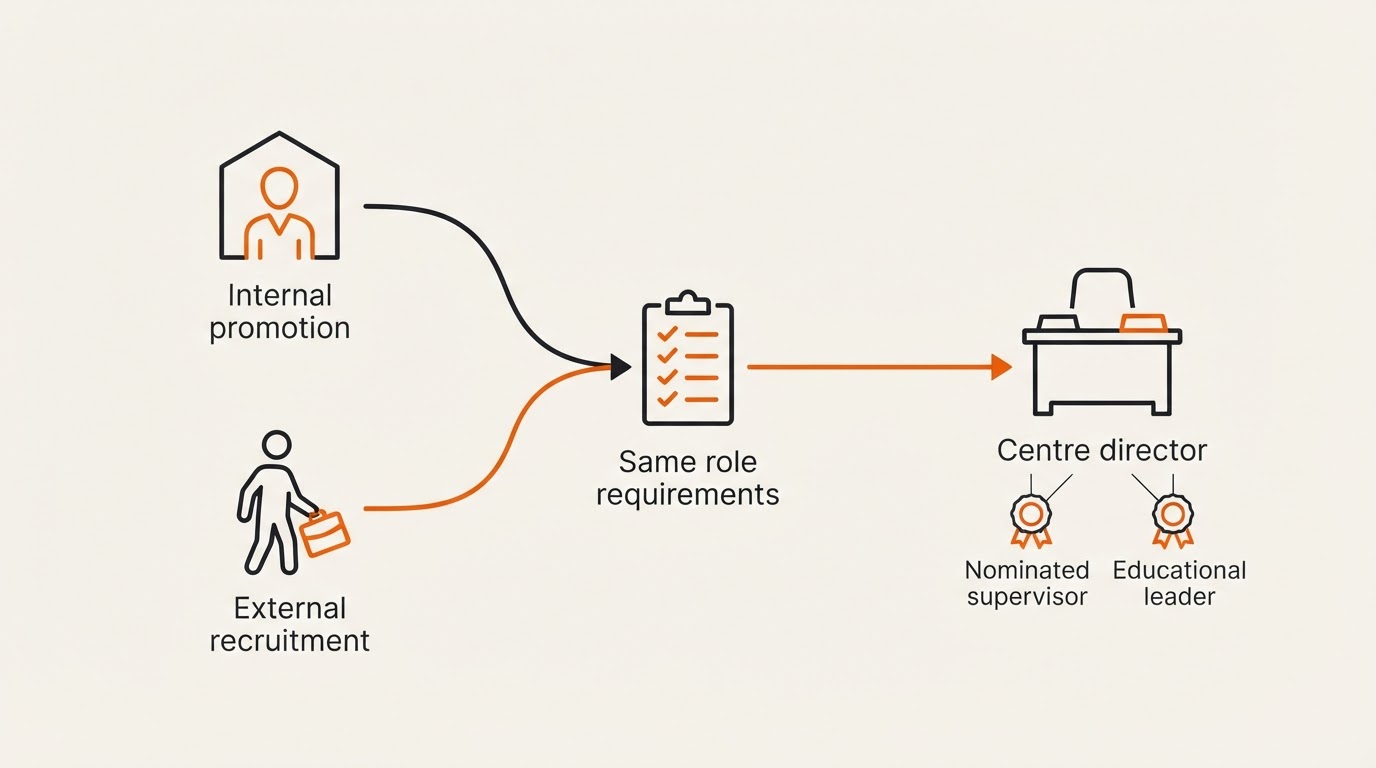
Describe the role’s purpose in concrete terms. Explain the work the person will lead, contribute to or complete independently. Separate responsibilities belonging to the position from those held by the centre director, educational leader or wider management team.
For a teacher position, explain the educational program and assessment responsibilities attached to the work. For an educator position description, specify the room allocation, daily responsibilities and collaboration expected. For a room leader job description, define leadership responsibilities rather than relying on the title to explain them.
State which requirements are essential and which are preferences. Describe the evidence candidates need to provide for each essential requirement. Where the employer can support development, identify that support instead of presenting every capability as mandatory from the first day.
Explain the selection process before applications arrive. Confirm who reviews candidates, who interviews, how references are obtained and who makes the appointment decision. Give the agency enough information to explain the process accurately to candidates.
Resolve conflicting expectations before recruitment begins. If different managers expect different duties or hours, agree the position first. Otherwise, candidates will be assessed against requirements that change according to whom they speak with.
Getting qualifications and requirements right
Check qualification requirements against the proposed work and service setting. Do not assume that an educator qualification, teaching qualification and qualification recognised for school-age care are interchangeable.
The Australian Children’s Education and Care Quality Authority provides approved qualification information and explains how to check whether a qualification is recognised. It also notes that some jurisdictions require early childhood teachers to hold registration or accreditation. Check the individual qualification and the relevant jurisdiction before describing a candidate as eligible. >Official qualification checking guidance.
Separate the regulatory requirement from employer preferences. If the organisation requires additional experience or a particular qualification beyond the applicable minimum, label it as an employer requirement. Explain why it is relevant to the work.
For outside school hours care, check the requirements applying to school-age care in the relevant state or territory. The official guidance identifies different qualification requirements across jurisdictions. Do not copy a preschool-age qualification statement into a school-age role without checking it. >Qualification requirements by setting.
Identify any additional appointments attached to the position. If the person will be educational leader, state that responsibility separately. Regulation 118 requires written designation of a suitably qualified and experienced person to lead development and implementation of the educational program. Explain the work and support attached to that designation. >Educational leader guidance.
List the documents and checks required before commencement, with responsibility for verifying them. Avoid compressing qualification recognition, registration and screening into a vague requirement to hold “all relevant checks”. Give the agency and candidate a clear account of what must be established.
Describing the service, team and roster honestly
Explain where the person will work and how the team is organised. Include the room or program allocation, reporting relationships and people available for support. Describe the operating environment without identifying children, families or confidential personnel matters.
State the roster expectations clearly. Specify contracted hours, working days, shift arrangements and any requirement to work across locations. Where details remain undecided, settle them before presenting the position as ready for recruitment.
Describe how time is allocated between direct work with children and other responsibilities. Explain the arrangements for planning, documentation, meetings and professional learning. Confirm applicable entitlements separately rather than assuming that a broad statement about flexibility explains the working conditions.
Give a realistic account of the service’s priorities. If the role involves improving a process, strengthening team collaboration or supporting a transition, explain the task and available resources. Do not turn an unresolved organisational problem into a personal attribute candidates are expected to possess.
Cumming, Wong and Logan examine educator wellbeing in relation to work environments and how quality is understood in early childhood education. Their analysis supports examining the conditions surrounding a role, rather than treating wellbeing solely as an individual educator’s responsibility. Use that distinction when describing workload and workplace support. >Cumming, Wong and Logan (2021).
Describe support in terms a candidate can assess: who provides induction, who answers operational questions and how professional feedback occurs. Replace claims about a “supportive culture” with the arrangements the person will actually experience.
Keep the childcare job advertisement consistent with the role description. A shorter advertisement can summarise the position, but it should not omit conditions that materially change a candidate’s understanding of the work.
Pay, conditions and what to include
Confirm the applicable industrial instrument and classification before quoting remuneration. Assess the actual duties and employment arrangements rather than choosing an award solely from the job title.
The Fair Work Ombudsman explains the coverage of the Children’s Services Award for employers and employees within its stated industry and classifications. Teachers require a separate coverage assessment; the Educational Services (Teachers) Award includes provisions for teaching work in early childhood education services. Use the official sources and obtain appropriate advice where coverage is unclear. >Children’s Services Award summary and >Educational Services (Teachers) Award.
Tell the agency how remuneration will be communicated. State the offered amount or approved range, the basis on which it is expressed and whether superannuation is additional. Explain any approved allowances or additional benefits accurately.
Check current rates and conditions when preparing the brief. Use the Fair Work Ombudsman’s >pay guides rather than carrying a figure forward from an old advertisement.
Include employment type, contracted hours and any fixed-term dates or conditions where relevant. Explain roster expectations and agreed professional development support. Confirm the details internally before asking an agency to present them to candidates.
Distinguish confirmed benefits from proposals awaiting approval. If relocation assistance, study support or another benefit is being discussed, do not advertise it as available until the employer has authorised the offer and its conditions.
Ask the agency to refer remuneration questions back to the agreed brief. Establish who can negotiate and which changes need approval. This keeps candidate discussions consistent with the position the employer is prepared to offer.
An early childhood teacher job description checklist
Use the following check before releasing the brief. Identify missing decisions while they are still easy to resolve.
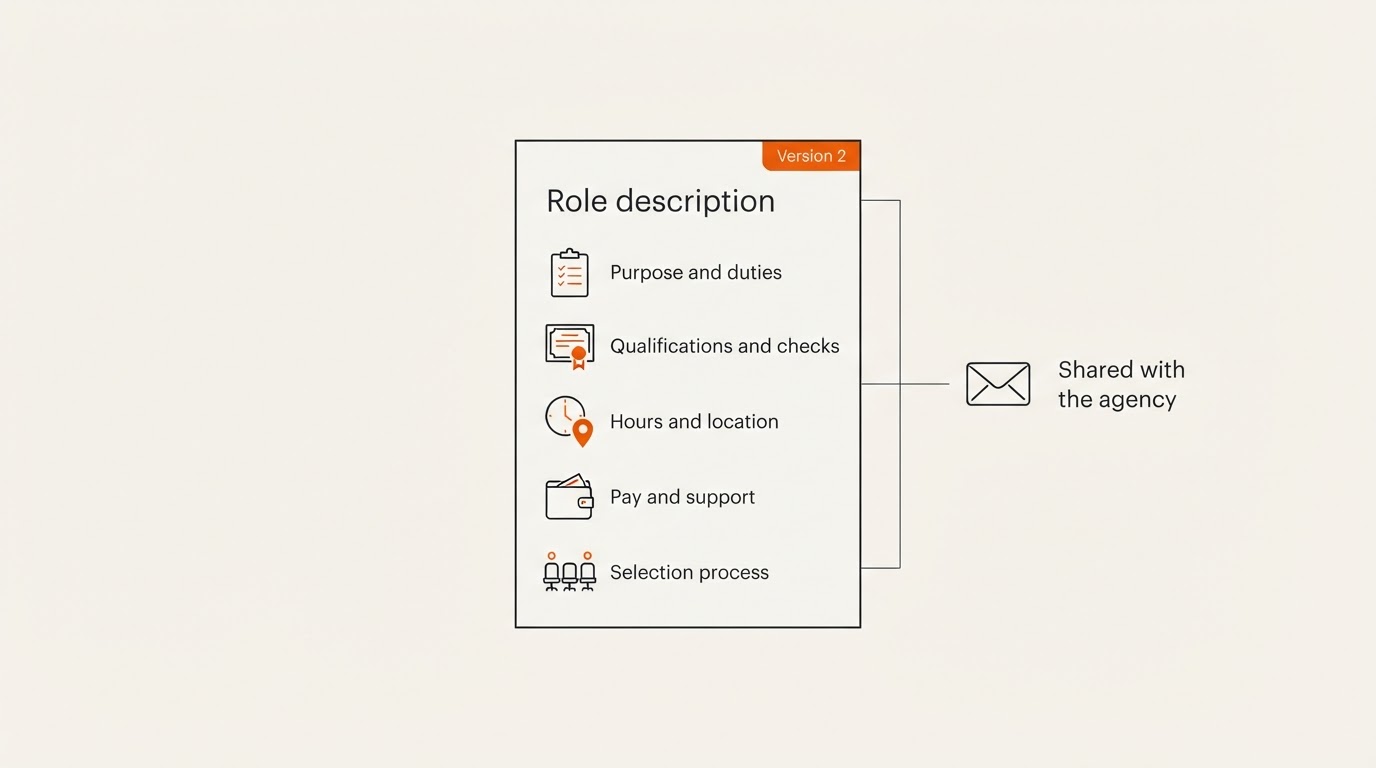
| Part of the brief | Include | Confirm before release |
|---|---|---|
| Purpose and duties | Program responsibilities, reporting line and additional appointments. | Which duties belong to this role and which remain elsewhere. |
| Qualifications and checks | Recognised qualification requirements and relevant registration or screening requirements. | Applicable setting, jurisdiction and evidence needed. |
| Hours and location | Employment type, contracted hours, roster and work locations. | The actual arrangement the employer can offer. |
| Pay and support | Approved remuneration, conditions, induction and development support. | Industrial coverage, current requirements and authorised benefits. |
| Selection process | Assessment criteria, decision-makers and candidate communication. | Who can approve changes and make the appointment. |
Read the completed description from a candidate’s perspective. Check whether the person can understand the work, conditions and support without relying on assumptions. Remove duplicated duties and explain unfamiliar internal terminology.
Send the agency the final version with a date and version identifier. When requirements change, issue an updated brief and identify what changed. Confirm that advertisements and candidate conversations reflect it.
You can find an agency by recorded services and coverage, then discuss the completed brief directly. Read how listings are checked to understand the directory’s evidence standard.
Keep the agreed description available through selection and induction. Use it to guide interview questions, reference discussions and early conversations about responsibilities. A clear brief supports consistent decisions from recruitment through commencement.
Frequently asked questions
What is the difference between a role description and a job advertisement?
A role description sets out the work, responsibilities and requirements; a job advertisement presents the opportunity to potential applicants. Keep both consistent, and include material employment conditions in candidate information.
Should we require a particular qualification title?
Specify the recognised qualification level or teaching requirement needed for the work, then verify the individual qualification through the official guidance. Label additional qualification preferences as employer requirements.
What should we do if the role changes during recruitment?
Issue an updated brief and explain the changes to the agency and affected candidates. Recheck the assessment criteria and employment offer before continuing the process.
References
Cumming, T., Wong, S. and Logan, H. (2021) ‘Early childhood educators’ well-being, work environments and “quality”: Possibilities for changing policy and practice’, Australasian Journal of Early Childhood, 46(1), pp. 50–65. >https://doi.org/10.1177/1836939120979064.
Research specifically on writing early childhood job descriptions is limited; this reference supports the discussion of work environments and support, while qualification and employment requirements are sourced from official guidance.