Questions to ask an early childhood recruitment agency before you engage them

Before engaging an early childhood recruitment agency, confirm what it will provide, where it can deliver, what you will pay and how candidate checks will be handled. Put those answers into written terms and an agreed recruitment brief before work begins.
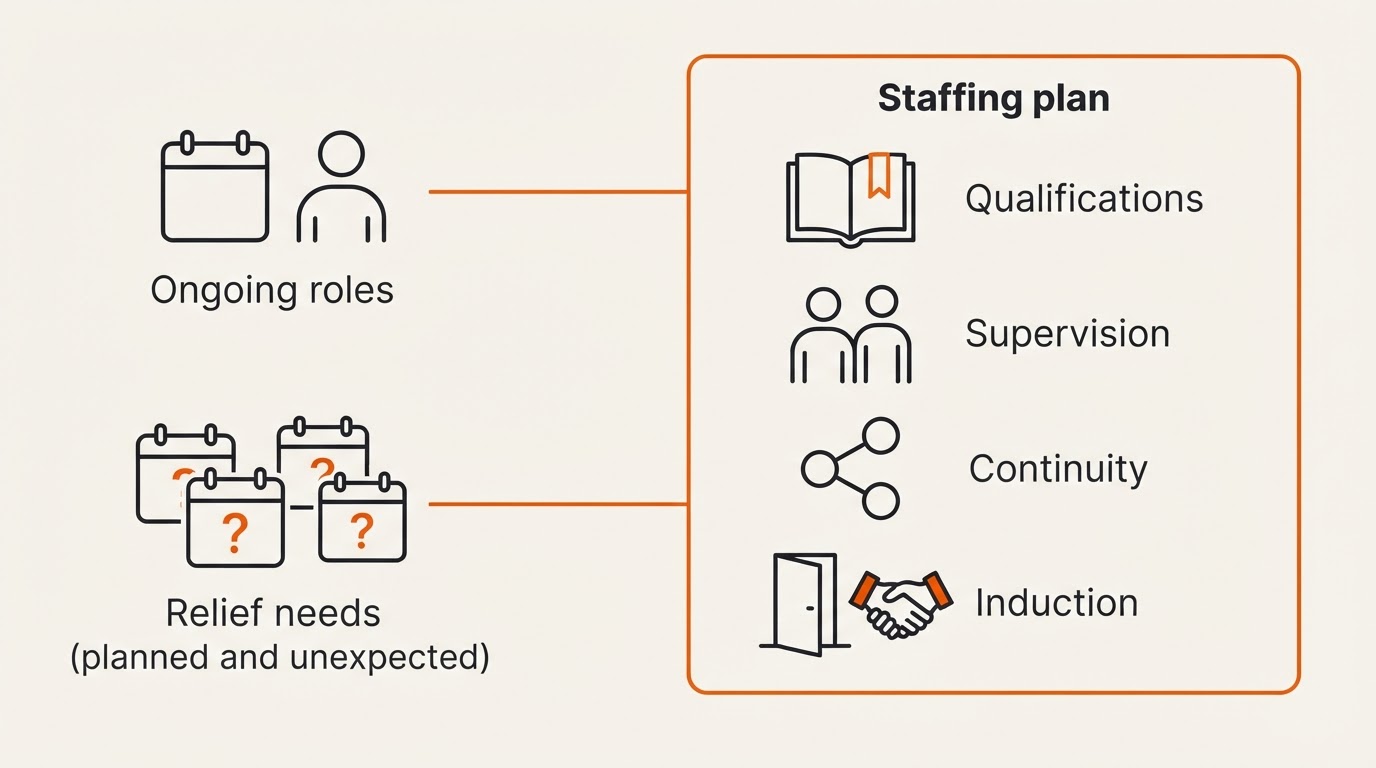
Start with the staffing problem, rather than a general request for help. An ongoing educator vacancy, a centre director search and a relief booking require different information and decisions. Define the assignment clearly enough that both parties can explain what a successful outcome involves.
Start with what you actually need
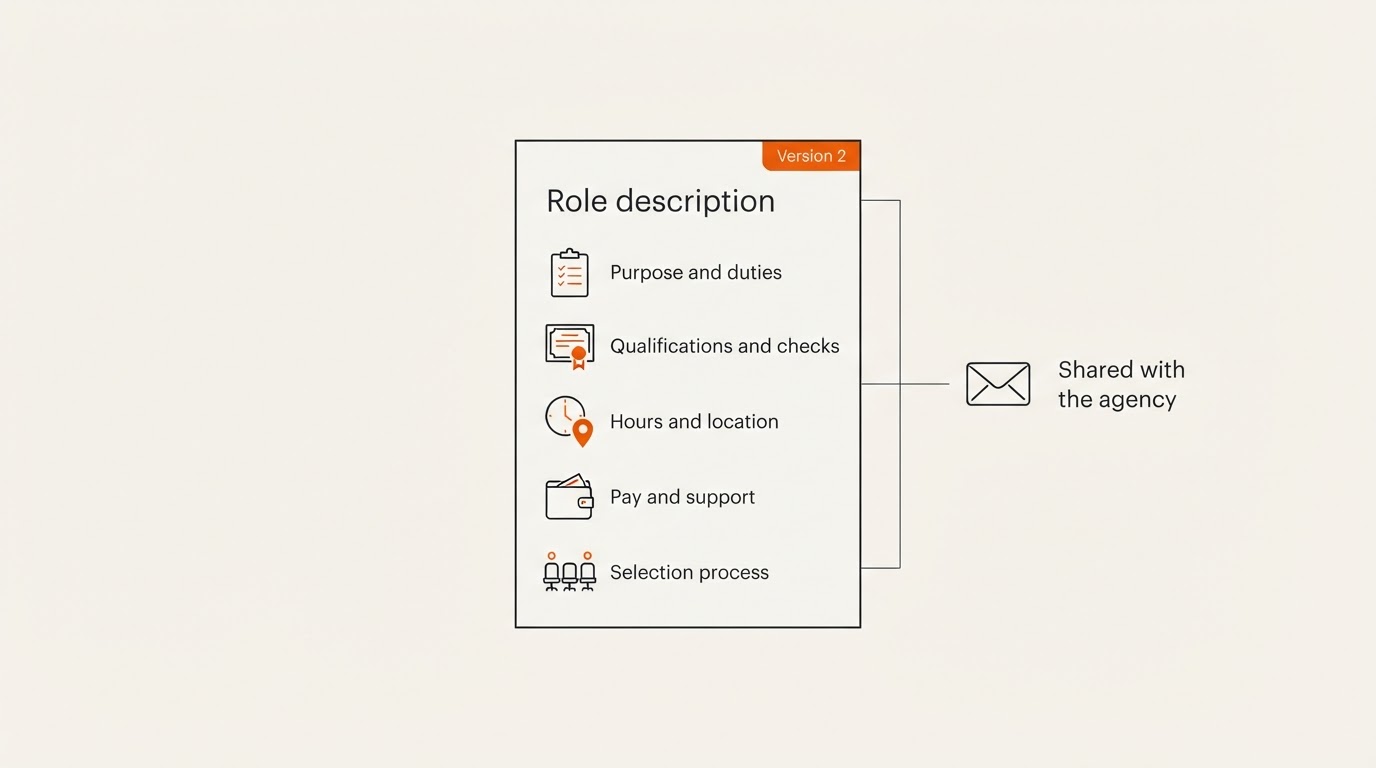
Describe the role or staffing gap before discussing an agency’s process. Identify the service type, location, hours, qualifications and responsibilities. Separate essential requirements from preferences and skills that the employer can support through development.
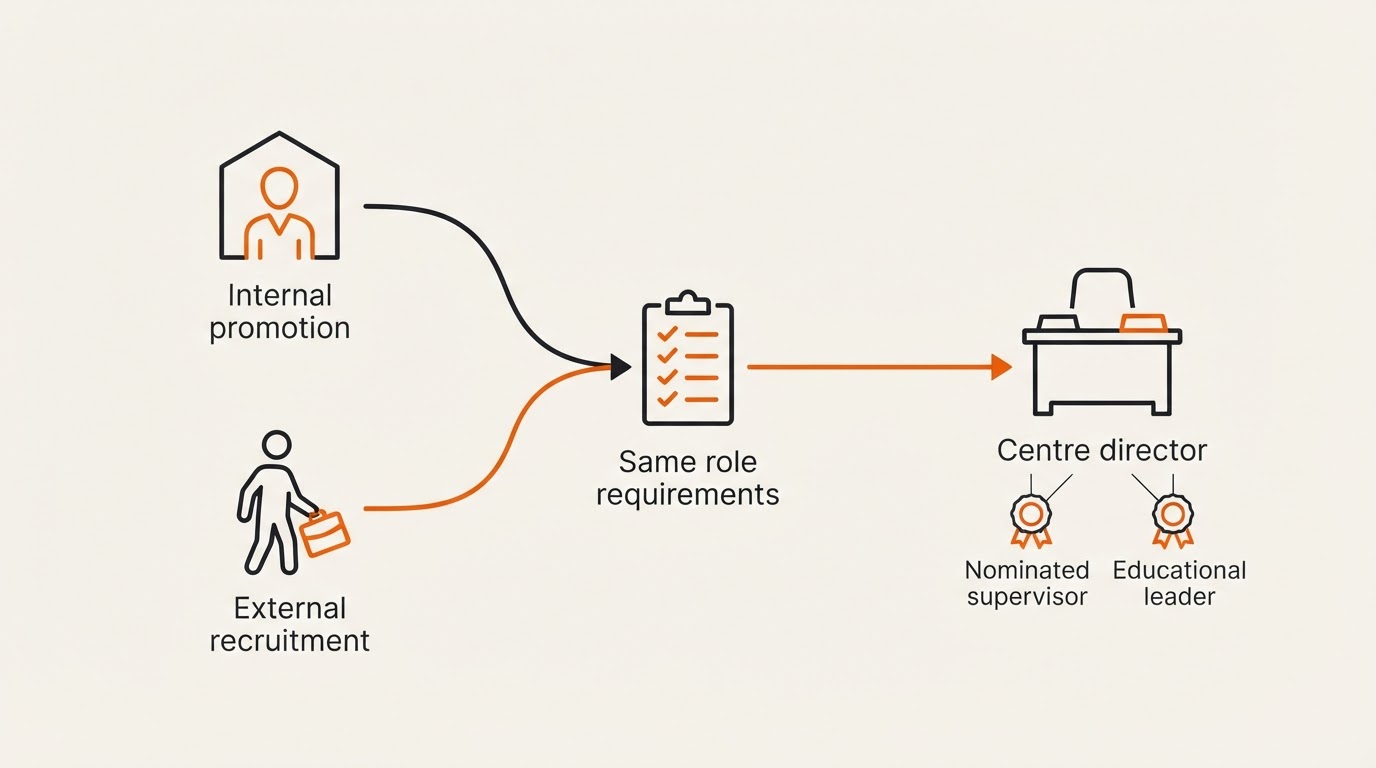
For permanent recruitment, explain the position’s reporting relationships, remuneration, selection process and intended start arrangements. Include the practical details affecting a candidate’s decision, such as travel between services or responsibility for a room.
For relief staffing, specify the dates, shift times, duties and qualification level needed. Explain the arrival process and who will provide induction and support. Update the brief when the assignment changes.
Clarify the employment arrangement. Ask whether the agency introduces candidates whom the employer hires directly, supplies its own employees, or proposes another arrangement. The Fair Work Ombudsman describes labour hire as an arrangement in which employees work for a labour hire employer and perform work for a host. Use that distinction to clarify the proposed service and responsibilities. >Labour hire guidance.
Check that the brief is workable before sending it. Resolve conflicting expectations about hours, pay, duties or qualifications within the organisation. An agency cannot assess candidates consistently against a role that changes between the advertisement and the interview.
Questions about services and coverage
Ask which parts of your requirement the agency undertakes. Do not assume that permanent recruitment, casual relief and leadership searches are included in the same offering.
Discuss the actual location and operating hours. For relief, ask how availability is confirmed for a particular shift. For permanent recruitment, ask how the agency proposes to reach suitable candidates for the role and location. A broad coverage statement does not confirm that a specific assignment can be filled.
Use this table to structure the initial conversation:
| Area | Question to ask | Written detail to obtain |
|---|---|---|
| Service and coverage | What will you provide for this role, location and timeframe? | Assignment scope, coverage and any limitations. |
| Fees and payment | What triggers each charge, and what is included? | Fee calculation, additional charges, taxes and payment terms. |
| Replacement guarantee | What happens if the placement ends within the stated period? | Conditions, exclusions, notification deadlines and available remedy. |
| Candidate checks | Which checks will you perform, and what evidence will we receive? | Check scope, documentation and responsibilities retained by the provider. |
| Communication | Who manages the assignment, changes and unresolved concerns? | Contact person, update arrangements and escalation process. |
Ask what happens when the agency cannot meet the request. Establish when it will notify you and how changes to the brief will be agreed. For an urgent booking, obtain confirmation of the individual’s availability rather than treating an enquiry as a filled shift.
For services in different jurisdictions, specify where the person will work. Qualification requirements differ by setting, and each state and territory has its own qualification requirements for school-age care. Use the official >qualification requirements guidance when defining the assignment.
Questions about fees, terms and replacement guarantees
Request the complete terms before authorising work. Ask what event creates a fee obligation and how the amount is calculated. Establish whether charges apply at commencement of the search, candidate introduction, acceptance, employment commencement or another defined point.
Compare like assignments. Permanent recruitment fees and relief booking charges pay for different services, so assess them separately. Ask what is included in the quoted price and which additional charges apply.
Read introduction and engagement provisions carefully. Ask how the terms address a candidate already known to the employer, a candidate introduced through more than one route, or a person later appointed to a different role. Resolve unclear wording before accepting candidate information under those terms.
Treat a replacement guarantee as a defined contractual arrangement. Ask what circumstances qualify, what the employer must do and what remedy is offered. Establish whether the provision offers another search, a replacement candidate, a credit or a refund.
Check any exclusions and deadlines. Ask how changes to the role, employment conditions or payment timing affect the provision. Do not infer that a guarantee covers every reason a placement ends.
Document cancellation and change arrangements as well. Establish what happens if the employer withdraws the role, postpones the start date or alters the assignment. Obtain appropriate advice where contractual obligations remain unclear.
Questions about candidate checks and qualifications
Ask the agency to identify each check it performs and the evidence it provides. Replace broad assurances such as “fully checked” with a clear account of the process, documents reviewed and matters still requiring employer verification.
Qualification checks must relate to the individual and proposed role. The Australian Children’s Education and Care Quality Authority explains how to check approved qualifications and notes jurisdictional requirements, including some teacher registration or accreditation requirements. Use its >qualification checking guidance rather than relying on a familiar course title.
Ask how references are obtained and recorded. Establish whether they address the candidate’s conduct, responsibilities and suitability for the proposed work. Distinguish a reference collected for a previous assignment from information relevant to the current position.
Clarify how identity, screening and other required documents are checked before commencement. The official National Early Childhood Worker Register guidance states that approved providers must still check relevant screening clearances, qualifications and other required documents. Registration does not replace those checks. >Worker Register guidance.
Use the official >child-safe recruitment guidance to inform the provider’s recruitment process. Screening is one component of assessing suitability; it does not settle every question about a person’s conduct or readiness for a specific role.
Agree how information will be shared and stored. Request the material needed for the recruitment decision, identify who can access it, and establish a process for addressing missing or inconsistent information before the person starts.
Comparing agencies on facts, not promises
Give agencies the same brief and compare their answers against it. Record confirmed information separately from statements that still need clarification. An appealing presentation should not carry more weight than a clear service description and workable terms.
Assess the proposed process as well as the price. Examine how candidates will be assessed, how updates will be provided and how the agency will handle changes or concerns. Ask for clarification where an answer does not address the actual assignment.
Keep service limitations visible. If an agency does not provide the required service or cannot confirm coverage, record that fact rather than filling the gap with assumptions. Equally, do not treat an unanswered question as proof that the service is unavailable; obtain a direct answer.
You can find an agency using recorded services and coverage, then confirm your requirements directly. Read how listings are checked to understand the evidence behind the directory. Alphabetical listing supports discovery without ranking or recommending agencies.
Before engagement, confirm that the brief, terms and responsibilities agree with one another. Assign a person within the employer organisation to manage the assignment and make decisions. Keep the agency informed when requirements change.
After recruitment or a booking, review the outcome against the agreed scope. Record whether the process supplied the information and cover required, and identify changes needed for the next assignment. Use factual feedback to improve the working arrangement.
Frequently asked questions
What should we ask about recruitment agency fees?
Ask what triggers the fee, how it is calculated and which services or additional charges it covers. Obtain the complete written terms and compare prices against the same assignment.
Does a replacement guarantee mean we receive a refund?
Only if the written terms provide a refund in the circumstances involved. Check the remedy, eligibility conditions, exclusions and notification requirements before relying on the guarantee.
Can we rely entirely on an agency’s candidate checks?
No: approved providers must still complete their required checks and assess suitability for the proposed work. Agree which evidence the agency supplies and verify the outstanding requirements before commencement.
References
Sackett, P.R., Zhang, C., Berry, C.M. and Lievens, F. (2023) ‘Revisiting the design of selection systems in light of new findings regarding the validity of widely used predictors’, Industrial and Organizational Psychology, 16(3), pp. 283–300. >https://doi.org/10.1017/iop.2023.24.
Van Iddekinge, C.H., Lievens, F. and Sackett, P.R. (2023) ‘Personnel selection: A review of ways to maximize validity, diversity, and the applicant experience’, Personnel Psychology, 76(2), pp. 651–686. >https://doi.org/10.1111/peps.12578.
Research specifically on agency engagement in early childhood education is limited; these two confirmed articles address hiring assessment and selection practice, rather than agency fees or replacement guarantees.